
Disconnected software is expensive in ways that are easy to miss: duplicate data entry, delayed information, and hours lost moving records by hand. Here is what connected systems are up against, and what integration is worth.
ROI & Performance Impact
1,000+
Apps the average company runs
MuleSoft Connectivity Benchmark Report
71%
Of those apps stay disconnected
MuleSoft Connectivity Benchmark Report
90%
Less manual data entry after automation
Typical result on Pulse integration projects
25+ yrs
Connecting business systems
Pulse Software Solutions, since 1998
Software that finally works together
Most businesses do not run on one piece of software. They run on a dozen: a CRM here, an accounting tool there, a payment processor, a shipping platform, and a few spreadsheets holding it all together. When those tools cannot talk to each other, your team becomes the integration, copying data by hand and chasing down mismatches.
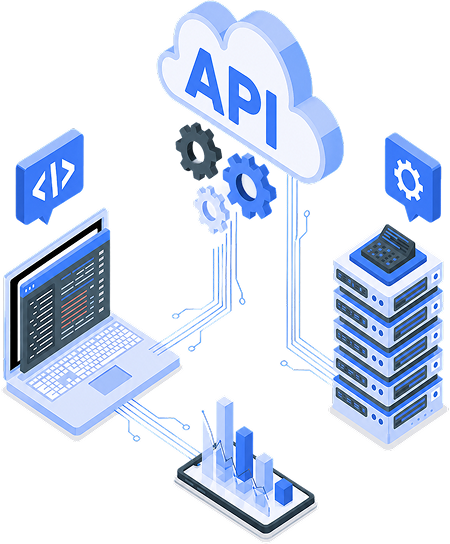
Pulse Software Solutions builds the APIs and integrations that connect everything. Whether you need a public API for your custom web application, a sync between your CRM and your billing system, or a middleware layer that ties your whole stack together, we make your software work as one.
We have done this for 25 years, for everything from a two-system connection to the integration backbone behind a full SaaS platform. From our home base in Denver, Colorado, we serve clients across the United States.
What We Build
Six integration capabilities that work on their own or combine into a single connected system tailored to your business.
Custom API Development
We design and build REST and GraphQL APIs from the ground up, with clean documentation and predictable behavior. Your developers, partners, and apps get a single, reliable way to read and write your data.
Third-Party Integrations
We connect the tools you already pay for, including CRMs, ERPs, accounting software, payment gateways, and shipping providers. Information flows where it needs to go without anyone exporting a spreadsheet.
Data Sync & Middleware
We build the middleware and webhooks that keep records consistent across every system in real time. When a record changes in one place, it updates everywhere else automatically.
Legacy & Database Connectivity
We expose data trapped in older systems, including Microsoft Access, on-premise SQL Server, and custom databases. Your legacy investment keeps working while modern apps finally read from it.
Payment & Billing Integrations
We integrate Stripe, PayPal, Authorize.Net, and subscription billing platforms so payments, invoices, and renewals run on their own. Money moves and reconciles without manual steps.
API Security & Management
We protect every endpoint with OAuth 2.0, token authentication, rate limiting, and monitoring. Strong API security keeps your data safe as it moves between systems.
Connect the tools you already use
We integrate the software your business runs on every day. If it has an API, we can connect it. If it does not, we can build one.
- CRMs and marketing automation platforms like Salesforce, HubSpot, and Pipedrive
- ERPs and accounting tools like NetSuite, QuickBooks, and Xero
- Payment gateways and subscription billing like Stripe, PayPal, and Authorize.Net
- Shipping, inventory, and logistics providers
- Ecommerce platforms like Shopify, WooCommerce, and BigCommerce
- Legacy databases, custom internal tools, and Microsoft Access systems
How We Build Your Integration
A reliable integration is not just code that happens to work today. It is built to keep working as your vendors update their software and your business grows. Here is the process we follow on every project.
Discovery and Systems Mapping
We start by mapping every system in your stack and the data that needs to move between them. You get a clear picture of where information lives today, where it gets stuck, and what an integrated workflow should look like.
API Design and Contract Definition
We define each endpoint, data format, and error response before writing code. This contract-first approach means your team, your partners, and your apps all agree on exactly how the API behaves.
Architecture and Security Planning
We choose the right pattern for your needs, whether that is direct API calls, a middleware layer, or an event-driven setup. Authentication, rate limits, and data protection are built into the plan, not bolted on later.
Build and Integration
We build the APIs and connect your systems in short, reviewable cycles. You see working integrations early and often, so there are no surprises at the end of the project.
Testing and Quality Assurance
We run the integration through automated test suites and real-world scenarios, including the edge cases that break fragile connections. We confirm data stays accurate under load and when a third-party service misbehaves.
Deployment, Monitoring, and Support
We deploy carefully and set up monitoring that alerts us before small issues become outages. From there we handle ongoing deployment and monitoring, so your integrations keep running as your business and your vendors evolve.
Ready to get your systems talking to each other? Pulse Software Solutions is based in Denver, Colorado and works with clients across the United States. Tell us what is not connected, and we will show you how to fix it.
Flexible Engagement Models
Start small or build the whole connected stack. Pick the engagement that matches where you are today, and scale up when you are ready.
Integration Audit
We map your current systems, document every manual handoff, and deliver a prioritized connection plan. A fixed-scope starting point with no commitment to build.
Single Integration Build
You need two specific systems talking to each other. We scope it, build it, test it, and ship it on a clear fixed price and timeline.
Full Integration Platform
We build a middleware layer that connects many systems at once, with shared logic, logging, and a foundation you can add new connectors to over time.
Ongoing API Support
We monitor your live integrations, fix issues when a vendor changes their API, and build new connections as your stack grows, all on a simple monthly plan.
FAQs
What is the difference between an API and an integration?
An API is the doorway. It is a defined set of rules that lets one piece of software request data or actions from another. An integration is the actual connection you build using those doorways, wiring two or more systems together so they share data and stay in sync. We do both: we build the APIs and we build the integrations that use them.
Which systems and tools can you connect?
If a system has an API, we can almost certainly connect it. We regularly integrate CRMs like Salesforce and HubSpot, ERPs and accounting tools like NetSuite and QuickBooks, payment gateways like Stripe and Authorize.Net, shipping and logistics platforms, marketing tools, and custom in-house databases. When a system has no API, we can often build one for it.
Do you build REST or GraphQL APIs?
Both. REST is the proven, widely supported standard and the right choice for most projects. GraphQL is a strong fit when clients need flexible queries or you want to reduce the number of round trips. We recommend the option that fits your use case rather than the one that is trendy, and we document whichever we build so your team can work with it.
Can you connect older or legacy systems like Microsoft Access?
Yes. Connecting legacy systems is one of our specialties. We can expose data from Microsoft Access, on-premise SQL Server, and older custom software so modern apps can read and write to it. If a full rebuild makes more sense, our custom software team can modernize the platform while keeping your data intact.
How do you keep our data secure during integration?
Every integration we build uses authenticated, encrypted connections with the least access needed to do the job. We apply OAuth 2.0, token-based auth, and rate limiting, and we log activity so issues are easy to trace. For healthcare and other regulated work, our compliance guidance covers HIPAA and SOC 2 requirements end to end.
What happens if a third-party API changes or breaks?
Vendor APIs do change, and a fragile integration will break silently when they do. We build in monitoring and alerts so we catch problems fast, and we design connections to fail safely rather than corrupt data. With an ongoing support plan, we handle vendor changes for you, often before you notice anything.
Do you offer ongoing support and monitoring after launch?
Yes. Integrations are living systems, so most clients keep us on a monthly plan for monitoring, maintenance, and new connectors as their stack grows. We also handle the underlying deployment and monitoring so everything stays reliable as you scale.
Looking for an agency for your next cloud initiative?
Since 1998, Pulse Software Solutions has delivered over 5,000 solutions worldwide, with operational excellence at the core of our work culture.
See Our Success Stories Request a Free Estimate OUR CLIENTS
Who We Work With