Web Accessibility · ADA Compliance · Pulse Software Solutions
An accessible website protects your business from lawsuits, opens the door to millions more customers, and signals that your brand respects every visitor who lands on it.
Jump To Section
In a digital-first economy, an accessible website is no longer a nice-to-have. It is a legal expectation, a competitive advantage, and a clear signal of how your business treats people. Web accessibility means designing your site so everyone, including users with visual, auditory, cognitive, or motor disabilities, can browse, click, fill out forms, and complete a purchase without friction.
At Pulse Software Solutions, we build and audit websites that meet ADA standards so our clients can grow their audience and stay out of court. Here is why ADA compliance matters and how we help American businesses keep their digital presence accessible to every visitor.
The Legal Backdrop
Why ADA Compliance Matters
The Americans with Disabilities Act is a civil rights law that guarantees equal access and opportunity for people with disabilities. It started with physical spaces, ramps, doorways, parking, but US courts have steadily extended it to the digital world. Today, your website is treated like a place of public accommodation, which means it must work for users with visual, auditory, cognitive, and motor impairments.
Businesses that ignore ADA compliance are exposed to real legal action. Digital accessibility lawsuits are climbing year over year, with retailers, restaurants, healthcare providers, and SaaS companies all named as defendants. Settlements run into the tens of thousands, and the legal bill is only one part of the cost. The other part is reputational, and that one lingers.
What’s at Stake
The Risks of Non-Compliance
Letting accessibility slide is rarely a one-line problem on a balance sheet. It tends to surface in three painful places at once.
ADA non-compliance suits can cost thousands in legal fees, court-ordered fixes, settlements, and statutory fines, often before a single bug is patched.
Press coverage, customer reviews, and social posts about an exclusionary site hit your brand harder than the legal bill, and they outlast it.
Roughly one in four US adults lives with a disability. An inaccessible site quietly turns away a huge slice of buyers, applicants, and partners.
In a crowded market, accessibility is more than a legal shield. It is a growth lever, an inclusion statement, and a trust signal all in one.
Accessibility is not a defensive expense. It is the lowest-friction way to expand your addressable market while removing one of the biggest legal exposures a US business can carry online today.
How We Work
Our Process for Ensuring ADA Compliance
We treat accessibility as an ongoing practice, not a one-shot audit. Here is the five-step workflow we use to bring a site into compliance and keep it there.
The Business Case
Why Web Accessibility Should Be a Priority
Accessibility is not just a compliance checkbox. It is a deliberate decision to design for every visitor who lands on your site. When you commit to it, three things happen at once.
You expand your audience. An accessible site opens your doors to millions of users with disabilities who otherwise bounce within seconds.
You build trust and loyalty. Customers notice when a brand treats inclusion as a default setting, not a marketing slogan.
You sidestep legal exposure. Proactive compliance is far cheaper than a demand letter, an emergency remediation sprint, and a settlement.
Treat accessibility as an investment in your business. It improves user experience, lowers risk, and gives every visitor a fair shot at converting.
Real Project
Case Study: ADA Compliance for AssessTEAM
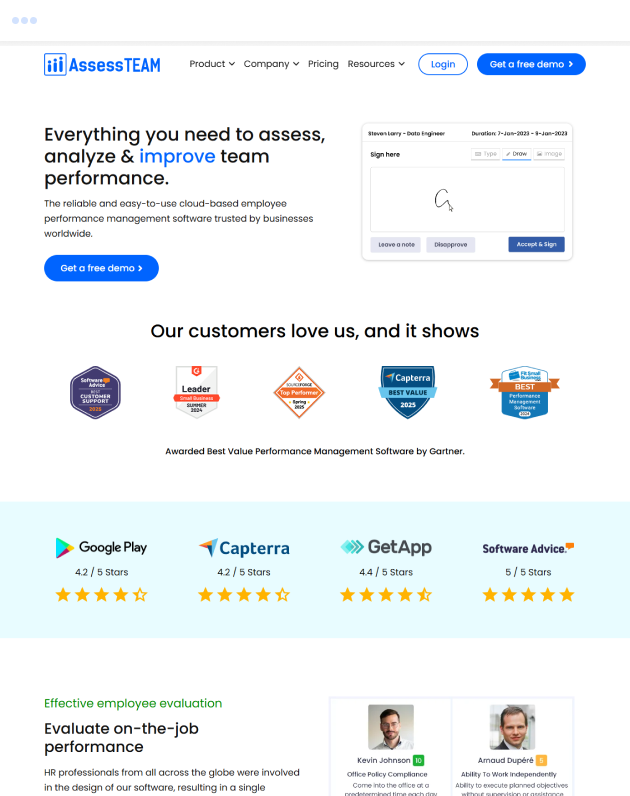
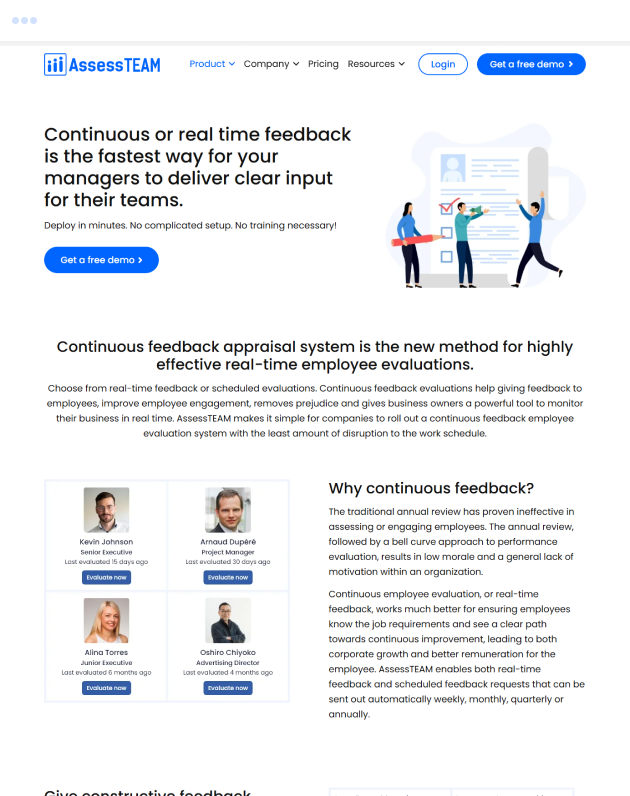
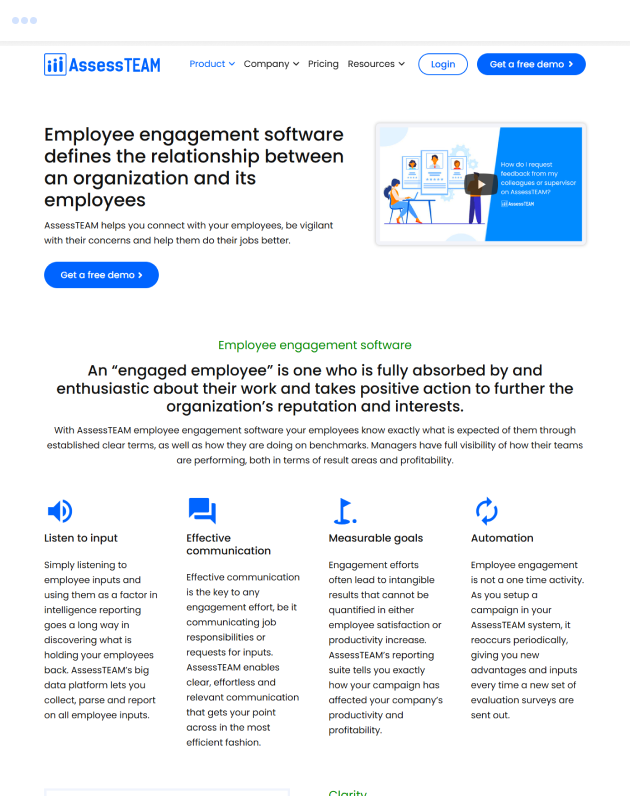
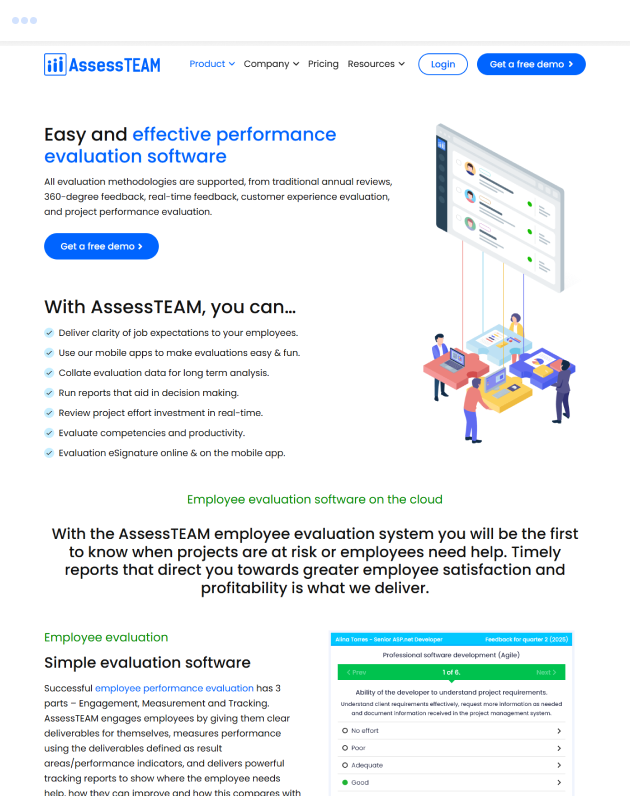
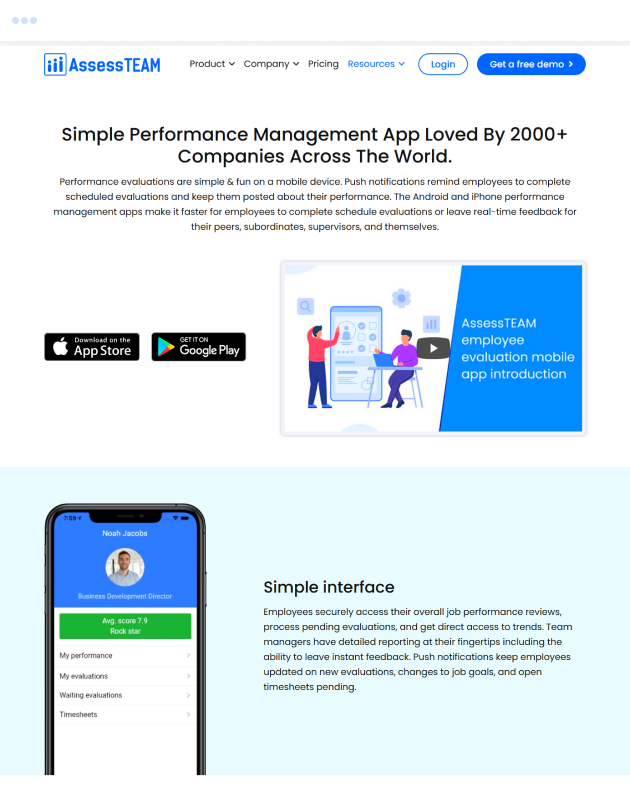
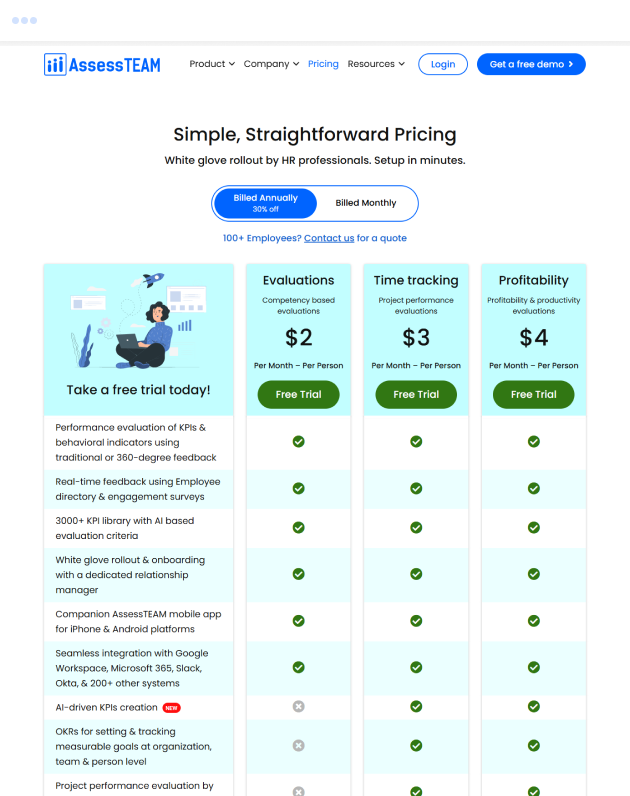
AssessTEAM is a cloud-based performance management platform built to power continuous feedback, streamline employee evaluations, and tie workforce performance to business goals. As part of our work on the product, we prioritized ADA accessibility across every surface, the web application, evaluation interface, signature interface, and mobile app.
Key ADA Enhancements We Shipped
The work spanned four product surfaces. Each one got its own dedicated set of accessibility upgrades.
Evaluation Interface
Full keyboard navigation with tab and shift+tab, ARIA roles applied across components, screen reader compatibility through descriptive alt text and form labels, sufficient color contrast ratios on text and UI, plus clear error identification and guidance on every form field.
Signature Interface
An accessible signature capture tool with keyboard navigation and assistive tech alternatives, a text-based consent option in place of a physical signature, and visible focus states with announcements for assistive tech during signing.
Mobile App
Built to WCAG 2.1 Level AA mobile guidelines, with dynamic text resizing, native TalkBack and VoiceOver support, optimized touch targets, gesture alternatives for one-handed and low-dexterity users, and semantic HTML labels on every interactive element.
General Platform
Skip-to-content links, accessible dropdowns, modal dialogs with focus trapping and keyboard dismissal, and accessible alerts and status updates for evaluation completion, submission, and approval events.
ADA compliance is not a checkbox. For AssessTEAM, it became a strategic asset that helped close enterprise deals while letting every employee participate equally in performance reviews, regardless of physical ability.
Make your website work for everyone
Don’t wait for a demand letter to start thinking about accessibility. Talk to our team about an ADA audit, a UserWay rollout, or a full compliance program tailored to your site.